Blogs

Sharing knowledge is key to an innovative and healthy industry! This knowledge center is therefore a central place on our website to share information. Read all about our industry in the blogs below!

Top 10 Agricultural Irrigation Fittings You Need to Know?

In the world of agriculture, efficient water management is crucial. Agricultural Irrigation Fittings play a vital role in this process. According to Dr. Sarah Thompson, a renowned expert in agricultural engineering, "The right fittings can make all the difference in water efficiency and crop yield." Her insights remind us of the importance of choosing quality components.

Understanding these fittings can be overwhelming. Farmers often face a myriad of options, each designed for specific needs. From pipe connectors to valves, each fitting has its own unique purpose. The challenge is to find the perfect combination for your irrigation system.

Moreover, not all products meet the same standards. Quality can vary significantly among manufacturers. This variability may lead to decisions that affect overall efficiency. Selecting the right Agricultural Irrigation Fittings is essential for achieving sustainable farming practices. Being informed helps navigate this complex landscape.
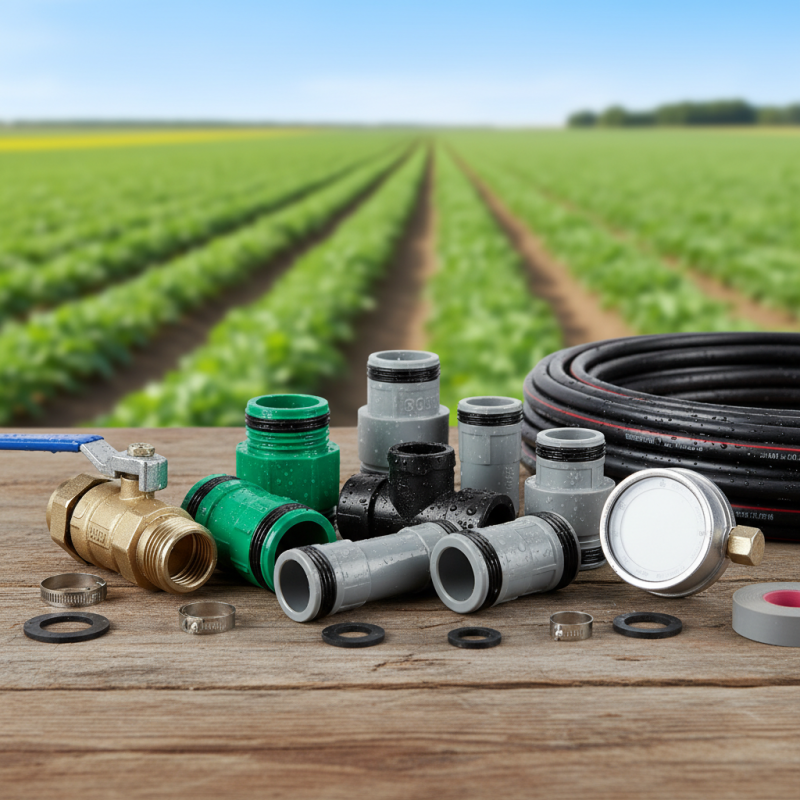
Top 10 Agricultural Irrigation Fittings You Need to Know?

Top 10 Essential Agricultural Irrigation Fittings for Efficient Farming

Irrigation is the backbone of agriculture.

Proper fittings make a significant impact on water management efficiency. Every farmer should understand the essential components of agricultural irrigation systems.

One crucial fitting is the hose connector. It ensures secure connections between pipes. A good seal prevents leaks and water wastage. Also, take note of valves. They control water flow easily. Using the right valve can save resources.

Another vital component is drip irrigation fittings. These fittings deliver water directly to plants' roots. This method reduces evaporation and runoff. Many farmers still overlook this technology. Adopting drip irrigation can increase yields significantly.

Further, regular maintenance of these fittings is important.

Clogging can disrupt water delivery and affect crop health. A simple check can make a big difference in production.

Key Features and Specifications of Drip Irrigation Fittings in Agriculture

Drip irrigation fittings are essential components in modern agriculture. These fittings connect the tubing and emitters that deliver water directly to the roots of plants. The right fittings can enhance water efficiency, leading to better crop yields. Key specifications include size, material, and pressure rating. Common materials are PVC, polyethylene, and nylon. Each material offers different advantages in terms of durability and cost.

Proper installation of drip irrigation fittings is crucial. A loose connection can lead to leaking and wasted water. It is important to check for compatibility between fittings and tubing. Choosing the right size fitting is vital to ensure an effective flow rate. Over time, users may find that certain fittings wear out. Regular inspection helps avoid system failures.

Understanding features like pressure compensating emitters and flow rate adjustment is important. These features allow for uniform water distribution. Some users may overlook these details during setup, leading to uneven watering. By paying attention to the specifics, farmers can optimize their irrigation systems. This not only saves water but also improves plant health over time.

Understanding the Role of PVC Fittings in Modern Irrigation Systems

PVC fittings play a crucial role in modern agricultural irrigation systems. They are lightweight yet durable, making them ideal for various applications. These fittings resist corrosion, ensuring long-lasting performance. Farmers benefit from easy installation and maintenance, reducing downtime in irrigation processes. The versatility of PVC allows for efficient connection of pipes and hoses. However, it’s essential to ensure proper sizing to avoid leaks and inefficiencies in water distribution.

Tips: Always measure pipe diameters accurately before purchasing fittings. This can save time and resources during installation. Consider the specific needs of your irrigation system, such as water pressure and flow rate.

Using PVC fittings comes with its challenges. They can become brittle over time, especially in extreme temperatures. Regular inspections are necessary to prevent breakage. Additionally, aligning fittings correctly is critical to avoid water wastage. If gaps develop, they may lead to costly repairs.

Tips: Make a habit of inspecting your irrigation system quarterly. Small issues can turn into larger problems if unnoticed. Understanding the importance of each component strengthens system reliability.

Comparative Analysis of Hose Fittings for Agricultural Water Management

When assessing hose fittings for agricultural water management, understanding material composition is essential. Various studies show that high-quality materials such as polyethylene or PVC are crucial for durability and resistance to environmental factors. Reports from the International Irrigation Association indicate that robust fittings can reduce leakage by up to 30%. Choosing the correct fitting helps prevent water loss, which is critical in drought-prone areas.

Another vital aspect to consider is compatibility. No single fitting type fits every hose size or use case. Research conducted by the Agricultural Water Management Society emphasizes that using mismatched fittings can increase pressure loss by about 15%. This data highlights the importance of selecting fittings that align with specific irrigation systems.

Value can also be drawn from proper maintenance protocols. Neglected fittings may suffer damage, leading to inefficiencies. Studies indicate that regular checks can improve overall system performance by 20%. In agricultural settings, every drop counts. Understanding these components can ensure effective water management in farming practices.

Top 10 Agricultural Irrigation Fittings You Need to Know

Fitting Type Material Connection Type Pressure Rating Typical Use
Elbow Fitting PVC Socket 150 psi Water transport in varying directions
Tee Fitting PVC Socket 150 psi Branching off irrigation lines
Coupling Brass Threaded 300 psi Connecting two hoses
Ball Valve PVC or Brass Threaded 200 psi Shutting off flow of water
Hose Connector Plastic Barb Not specified Attaching hose to tap or other hoses
Sprinkler Fitting Plastic Threaded 50 psi Irrigation of fields via sprinkler systems
Quick Connect Brass Quick Disconnect 150 psi Fast connection and disconnection
Pressure Regulator Plastic Barb Not specified Regulating water pressure in systems
End Cap PVC Socket 150 psi Sealing ends of pipes

Trends in Sustainable Irrigation Fittings and Their Impact on Crop Yield

Sustainable irrigation fittings play a crucial role in modern agriculture. They can significantly affect crop yield and resource management. Farmers increasingly seek solutions that minimize waste while maximizing efficiency.

Recent trends show a shift towards using materials that are both durable and environmentally friendly. Innovations in drip irrigation systems highlight this movement. These systems deliver water directly to plant roots, reducing evaporation and runoff. Farmers report improved crop growth and water conservation. However, there is still a gap in understanding how these fittings can be adapted for different climates and crops.

Education and training are vital. Farmers must learn about the various technologies and their benefits. Collaboration between experts and agriculturalists can facilitate this process.

Sharing experiences helps identify what works best in local contexts. As more data becomes available, ongoing adjustments can be made. This creates an opportunity to refine practices. The goal is to ensure that every farmer can optimize their yield sustainably.